
The People on My Block Every Morning
San Francisco is one of the most diverse places in the country. But statistics don’t tell you what it actually feels like to live alongside people whose lives look nothing like yours. Mike Edwards reflects on what it takes to really see your neighbors.
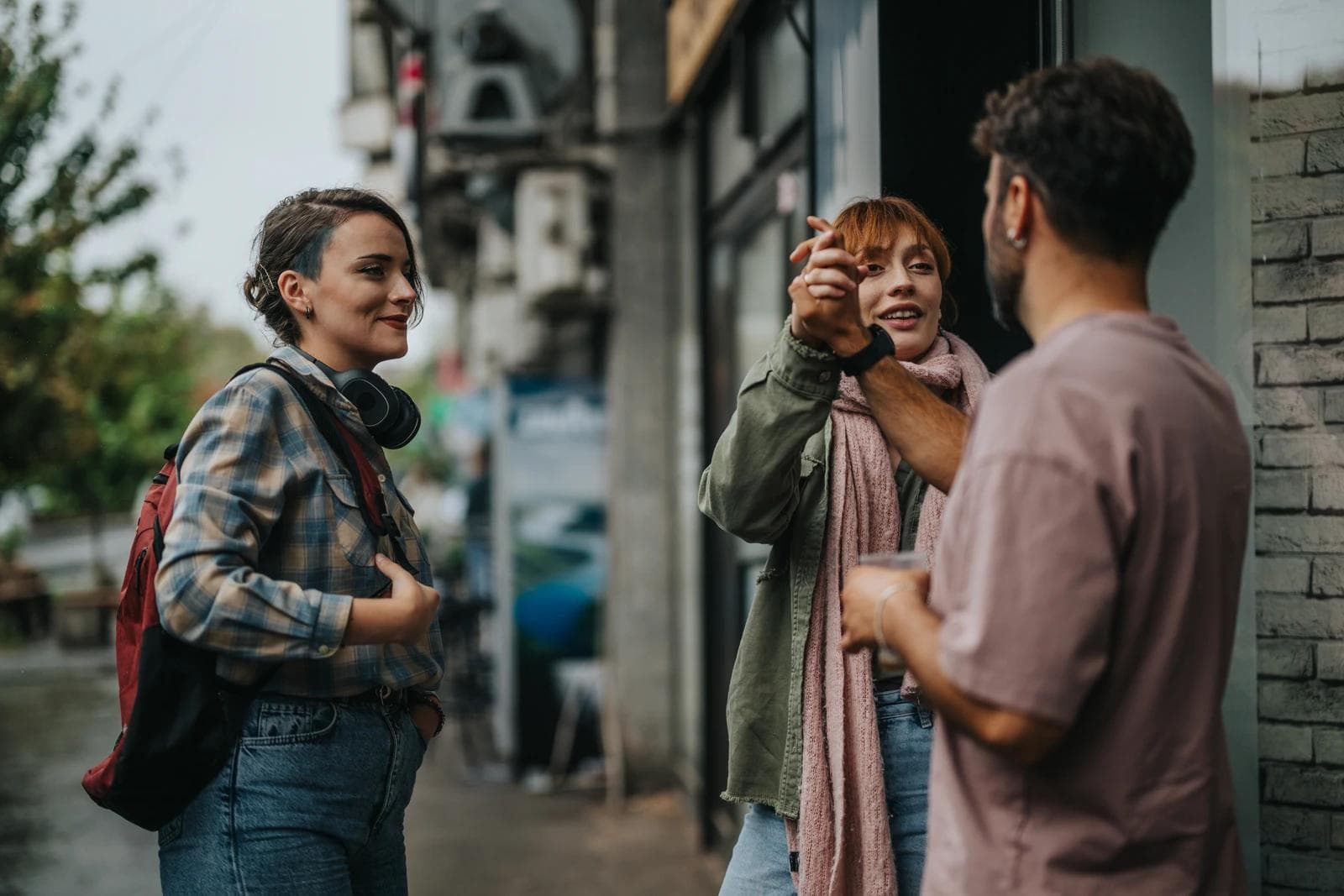
Numbers don’t walk the streets with you.
I walk a lot in this city. Usually with the dog. Usually without a plan.
Some mornings I pass five or six people before I reach the corner, and I find myself doing the thing you’re not supposed to admit: I’m quietly cataloging them. The older woman with the grocery cart is muttering to herself. The guy in the suit is on his phone, not looking up. Two teenagers are laughing about something I can’t hear. A man is sleeping in a doorway with an oversized bag pulled over his head.
All neighbors. All within a block of where I live.
San Francisco has a reputation for diversity, and the statistics back it up. Ethnic diversity. Economic diversity. Cultural diversity. Sexuality, lifestyle, politics. You can read the numbers and feel like you understand something. But numbers don’t walk the streets with you.
What the numbers don’t tell you is what it actually feels like to live alongside people whose lives look almost nothing like yours. In most cities, that difference tends to sort itself out. People cluster. Neighborhoods become legible. You can live comfortably inside a city of millions and rarely be surprised by who’s next to you.
San Francisco resists that. Not perfectly, and not without contradiction. But there is something about this place that keeps colliding you with the actual range of human life. The rainbow flag next to the Buddhist shrine. The luxury condo above the SRO. The dog park where the tech worker and the unhoused man both come, both regular, both looking for something like peace for an hour.
I’ve been here long enough that I used to stop noticing. That’s the thing about living anywhere for a while. The remarkable becomes routine. The stranger on the corner is just another corner. But lately I’ve been trying to slow down enough to actually see who is around me. Not to figure them out. Not to help them. Just to recognize that they are there. That we share this block, this neighborhood, this strange and gorgeous and broken city.
Perhaps that’s the beginning of something. Not a program or a strategy. Just the honest acknowledgment that the person waiting for the same bus is actually your neighbor. Not a category. Not a demographic. A person.
I don’t always know what to do with that. Most mornings I walk past and keep going. But some mornings I notice something shifts. A nod. A held door. The small recognition that the distance between us is smaller than it looks.
I’m still learning what it means to live in a place like this. But I think it starts there, on the sidewalk, with whoever happens to be standing next to me.
Discussion